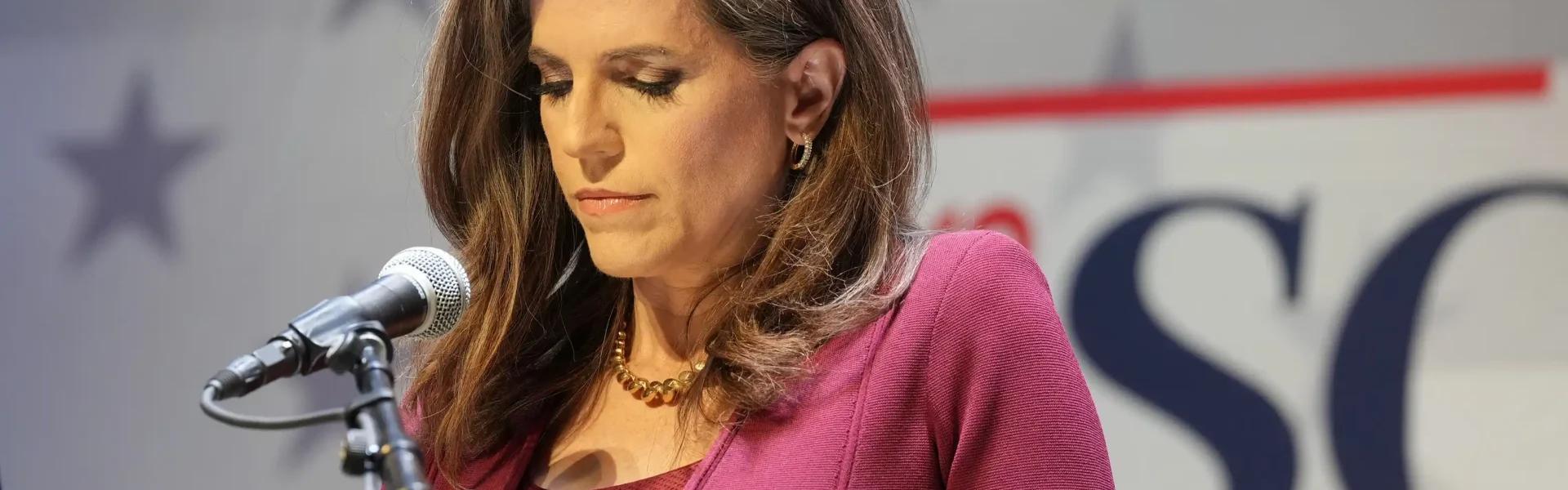
Nancy Mace Faces Political Backlash After Controversy as South Carolina Governor’s Race Narrows

A Heated Turning Point in South Carolina Politics
South Carolina politics has entered a highly charged phase as the governor’s race tightens and national attention increasingly focuses on Republican congresswoman Nancy Mace. Once considered one of the more visible rising figures within the Republican Party, Mace now finds herself at the center of political turbulence, controversy, and strategic realignment as the gubernatorial race in the state narrows and competing candidates gain momentum.
The situation reflects a broader pattern in modern American politics where personal controversies, national media narratives, and intra-party divisions can rapidly reshape electoral dynamics. In Mace’s case, the combination of policy positions, public statements, and ongoing media scrutiny has contributed to a shifting political landscape that is now influencing voter perception and campaign momentum.
The Political Climate in South Carolina
South Carolina has long been a stronghold for Republican politics, but recent election cycles have shown increasing complexity within the party itself. Rather than a unified political front, the state has seen growing internal divisions between establishment conservatives, populist factions, and newer political figures attempting to redefine Republican identity.
In this environment, the governor’s race has become more than a local election. It has evolved into a broader contest of ideology, influence, and party direction. Candidates are not only competing for votes but also for political identity within a rapidly changing Republican base.
As the race narrows, attention has shifted toward how national controversies and media narratives are influencing state-level elections, particularly for high-profile figures like Nancy Mace.
Nancy Mace’s Political Position and Rising Visibility
Nancy Mace has built a political career marked by visibility, outspoken commentary, and alignment with key Republican policy positions while occasionally diverging from party leadership on select issues. Her national profile has grown significantly in recent years due to media appearances, social media engagement, and involvement in high-profile political debates.
However, increased visibility often comes with heightened scrutiny. As her profile has expanded beyond South Carolina, so too has the level of national attention on her political decisions, public statements, and affiliations.
This dynamic has placed Mace in a politically sensitive position, where every controversy—whether local or national in origin—can influence public perception within her home state.
The Role of Controversy in Modern Campaign Politics
In today’s political environment, controversy plays a central role in shaping electoral narratives. Candidates are often judged not only by policy positions but also by how they respond to public criticism, media framing, and viral political discourse.
For Nancy Mace, recent controversy has become a focal point in discussions about her political trajectory. While supporters argue that she remains a strong conservative voice, critics suggest that ongoing media attention surrounding controversial topics has created unnecessary distractions during a critical election period.
This tension between political messaging and media narrative is not unique to Mace, but her high visibility has amplified its impact.
The Epstein Files Narrative and Political Framing
One of the more sensitive elements tied to recent coverage involves references to the so-called “Epstein files” narrative circulating in political commentary spaces. While these discussions vary widely in accuracy and interpretation across media platforms, they have become part of broader online political discourse involving multiple public figures.
In Mace’s case, references to this topic in commentary and social media discussions have contributed to increased scrutiny and polarized reactions. However, it is important to note that political narratives of this kind often become amplified in online environments where speculation and interpretation spread faster than verified reporting.
As a result, the intersection of controversy and political identity has become a defining feature of how her campaign is being discussed in certain circles.
Shifting Dynamics in the Governor’s Race
As the South Carolina governor’s race progresses, polling dynamics and political positioning have begun to shift. Lieutenant governor and attorney general candidates have advanced in visibility and voter traction, creating a more competitive environment than initially expected.
This tightening of the race has led analysts to reassess early assumptions about frontrunners and political momentum. In competitive primaries and statewide elections, even small shifts in public perception can significantly influence outcomes, particularly when multiple strong candidates are dividing voter bases.
For Nancy Mace, this means that every aspect of her public image—policy, messaging, and controversy management—plays a role in shaping her electoral viability.
Media Coverage and Narrative Pressure
Modern political campaigns are heavily influenced by media cycles that can rapidly amplify specific narratives. For high-profile candidates like Nancy Mace, this means that national headlines often intersect with local political realities.
Media coverage surrounding controversy can create a feedback loop where public perception is shaped as much by discussion about the candidate as by their actual policy positions. This is particularly relevant in tightly contested races where voter sentiment is still forming.
In Mace’s case, coverage has increasingly focused on controversy and political tension, which has added pressure to her campaign messaging and public appearances.
Internal Party Dynamics and Republican Strategy
Within the South Carolina Republican ecosystem, internal dynamics play a significant role in shaping electoral outcomes. The governor’s race is not only about winning general support but also about securing backing from key party factions, donors, and influential political networks.
As the race narrows, strategic alliances and endorsements become increasingly important. Candidates who can unify different segments of the party often gain an advantage over those perceived as divisive or controversial.
For Nancy Mace, navigating these internal dynamics is critical. Her national profile gives her visibility, but internal party cohesion remains essential for sustaining a competitive gubernatorial campaign.
Voter Perception and Political Identity
Voter perception in modern elections is shaped by a combination of policy alignment, personal branding, and media exposure. In South Carolina, where Republican identity is strong but diverse in interpretation, candidates must balance ideological consistency with broad appeal.
Nancy Mace’s political identity has been characterized by both strong conservative positioning and moments of divergence from party expectations. This dual perception can appeal to some voters while creating skepticism among others.
As the race narrows, voter perception becomes increasingly decisive, especially in primaries where turnout is driven by highly engaged political audiences.
The Broader National Implications
While the South Carolina governor’s race is a state-level contest, it carries broader national implications for Republican politics. High-profile candidates like Nancy Mace often serve as indicators of larger ideological shifts within the party.
The outcome of this race may influence how future Republican candidates position themselves on national issues, particularly in balancing media visibility, controversy management, and voter outreach strategies.
As such, the evolving dynamics of this campaign are being closely watched beyond South Carolina.
Conclusion: A Defining Moment in a Tightening Race
Nancy Mace’s position in the South Carolina governor’s race reflects the complexity of modern American politics, where media narratives, internal party dynamics, and public controversies all intersect.
As the race narrows and competition intensifies, the focus will remain on how effectively candidates manage both their political messaging and public perception. For Mace, the coming stages of the campaign will likely be critical in determining whether she can overcome controversy-driven narratives and regain political momentum.
Regardless of the outcome, this election cycle underscores how quickly political fortunes can shift in today’s highly connected and media-driven environment.
References
Nancy Mace official profile and congressional background
South Carolina political news and election coverage overview