
Celebrity culture no longer waits for a major awards show, blockbuster release, or carefully planned magazine cover to create a moment. In 2026, almost any public appearance can become headline material. A front-row seat at Paris Fashion Week can generate thousands of posts. A film premiere can become a fashion story. A talk-show appearance can produce a viral clip before the interview has even finished airing. Even a seemingly casual arrival at a restaurant, airport, hotel, or sporting event can suddenly become part of the daily celebrity news cycle. The result is a Hollywood landscape where stars do not necessarily need to make a formal announcement to command attention. Sometimes, simply being seen is enough.
Paris Fashion Week offered a perfect example of how quickly celebrity visibility can turn into entertainment news. During the first days of October, stars including Jennifer Lopez, Rihanna, Jennifer Lawrence, Shakira, Heidi Klum, Janelle Monáe, Paris Jackson, Sofia Vergara, and many others appeared at major shows and events across the city. Their appearances were not simply about attending fashion presentations. Every outfit became a separate conversation, every arrival became a photograph opportunity, and every unexpected celebrity pairing created another piece of content for social media. PEOPLE’s coverage of the week captured just how many stars were moving through Paris at the same time, from front-row appearances to parties and promotional events.
That is part of what makes modern celebrity culture so different from the traditional Hollywood publicity machine. In previous generations, celebrity exposure was often concentrated around a specific project. An actor would appear on a talk show to promote a movie, attend a premiere, pose for a magazine, and then largely disappear from the public conversation until the next project arrived. Today, those boundaries are much less defined. A celebrity can promote a movie while simultaneously becoming a fashion story, a social-media personality, a brand ambassador, a meme, and a lifestyle figure. One appearance can generate several different headlines depending on what the audience chooses to focus on.
Fashion has become especially powerful because it gives celebrities another way to remain culturally visible between major professional projects. A celebrity does not necessarily need a new film, album, television series, or award nomination to become part of the conversation. Showing up at the right fashion show in the right outfit can be enough. Jennifer Lawrence’s appearance at Dior, Rihanna’s return to the Paris fashion circuit, Shakira’s Tom Ford appearance, and the many other celebrity arrivals surrounding Fashion Week demonstrate how entertainment and fashion now operate almost as one continuous publicity ecosystem. PEOPLE’s weekly fashion coverage has increasingly become a record of celebrity visibility as much as clothing itself.
Rihanna’s Paris Fashion Week appearance also showed another side of the phenomenon: celebrities can become headlines even when the original event is not about them. Discussion surrounding her attendance at Dior quickly moved beyond the collection itself after social-media commentary questioned the timing of her arrival. Rihanna appeared to respond to the controversy online, creating another layer of attention around an appearance that might otherwise have remained a fashion story. The episode illustrates how quickly a celebrity appearance can develop its own narrative once social media begins interpreting every detail.
This constant visibility does not necessarily mean that celebrities are intentionally creating controversy. In many cases, the modern media environment simply makes it difficult for a public appearance to remain small. There are photographers everywhere, fan accounts documenting events in real time, entertainment publications publishing rapid updates, and social-media users ready to analyze everything from clothing choices to body language. The celebrity may attend an event for one reason, but the internet can decide that the real story is something completely different.
Film premieres have become particularly effective at creating this kind of layered attention. A movie premiere is no longer simply a screening followed by a few photographs on a red carpet. It can become a fashion event, a relationship story, a celebrity sighting, a promotional campaign, and a social-media spectacle simultaneously. The recent premiere activity surrounding films such as Animals, Verity, and East of Eden illustrates how crowded the entertainment calendar has become. Ben Affleck and Kerry Washington appeared together for the Los Angeles premiere of Animals, while Anne Hathaway, Dakota Johnson, Josh Hartnett, and others kept Verity in the entertainment conversation through appearances and press events.
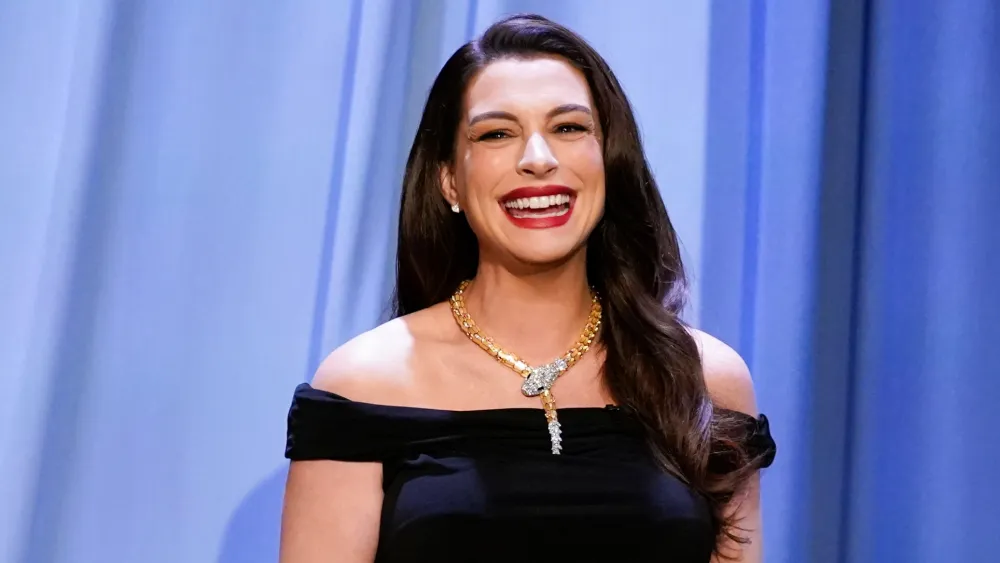
Anne Hathaway is a particularly useful example of how one promotional cycle can become an extended celebrity storyline. Her appearances around Verity have included premieres, interviews, talk-show appearances, and fashion coverage, meaning audiences are encountering her through multiple channels at once. Her appearance on The Tonight Show in a New York Knicks jersey became its own celebrity-fashion moment, while her Verity appearances generated additional coverage. The movie may be the reason for the publicity, but the celebrity becomes the central character of the promotional story.
That transformation is important because celebrity publicity is increasingly driven by the personality rather than the project. Audiences may initially click on an article because they are interested in a movie, but they stay because they want to know what the star wore, who they arrived with, what they said, how they reacted to a question, or what fans are saying online. The film becomes one piece of a much larger entertainment narrative.
The same thing happens with television and streaming projects. A celebrity does not have to be standing on a traditional red carpet to generate headlines. Press junkets, premieres, late-night appearances, festival panels, promotional photos, and social-media posts can all become separate moments. Pedro Pascal’s appearance at the New York Film Festival for Behemoth! was covered as an event in itself, while other actors moved between film festivals, premieres, fashion events, and television appearances during the same week.
The internet also rewards repetition in a way traditional media did not. Seeing the same celebrity several times in one week does not necessarily make audiences less interested. Instead, each appearance can create a slightly different conversation. The first appearance may be about an outfit. The second may be about a new project. The third may involve a funny interview clip. The fourth may become a meme. The celebrity remains recognizable while the context keeps changing.
This is why some stars seem almost impossible to escape from during major cultural weeks. They are not necessarily dominating every single category of entertainment. Rather, they are appearing across enough different cultural spaces that their visibility feels constant. One day they are in Paris. The next day they are on a red carpet. Then they appear in a magazine gallery, followed by a talk-show clip and a fan-edited video. The audience experiences all of those moments together, creating the impression that the celebrity is everywhere.
There is also a strategic advantage to this kind of visibility. Celebrities increasingly exist as personal brands, and personal brands depend on consistent recognition. A successful appearance does more than promote one project; it reinforces an overall image. An actor might use fashion appearances to establish themselves as a style figure. A musician might attend a designer show while preparing for a new release. A filmmaker might appear at an event with family members, creating a more personal connection with audiences. Even an apparently casual public moment can contribute to the broader celebrity identity.
Tim Burton’s rare appearance with his daughter Nell at the Loewe show during Paris Fashion Week demonstrates how quickly a personal moment can become part of the celebrity conversation. Their coordinated black outfits and front-row appearance attracted attention precisely because it offered audiences something different from a conventional promotional appearance. It was fashion, family, celebrity nostalgia, and visual storytelling in one moment.
This is one reason celebrity culture increasingly resembles a continuous television series. The audience is not simply watching stars promote individual projects. They are following ongoing storylines. Who is appearing where? Who is wearing what? Who is working together? Who has returned to the spotlight? Which celebrity is suddenly spending more time in public? Which actor is promoting a new project? Which musician has made an unexpected fashion appearance? These questions keep the celebrity news cycle moving even when there is no major scandal or breaking announcement.
And perhaps most importantly, the audience itself now participates in deciding which appearances matter. A celebrity can walk a red carpet expecting attention, but that does not guarantee the internet will focus on the intended message. A minor detail can become the headline. A particularly unusual outfit can eclipse the film being promoted. A celebrity interaction can become more widely discussed than the event itself. The modern celebrity does not completely control the story anymore because the audience is constantly rewriting it through comments, reposts, memes, reaction videos, and fan discussions.
That makes visibility both valuable and risky. Being constantly present can keep a celebrity relevant, but it also increases the number of opportunities for public criticism. The more appearances a star makes, the more material audiences have to analyze. Every outfit can be judged. Every quote can be clipped. Every interaction can be interpreted. Every absence can also become suspicious. In a culture that expects constant access, even choosing not to appear can become news.
This creates an unusual paradox for famous people. Visibility is essential to maintaining cultural relevance, but too much visibility can create fatigue. Celebrities therefore have to balance exposure with scarcity. The stars who remain most interesting may not necessarily be the ones who appear everywhere, but the ones whose appearances still feel meaningful when they do appear. A surprise fashion appearance, an unexpected premiere, a rare family outing, or a particularly memorable interview can have greater impact precisely because audiences cannot predict it.
Yet October 2026 demonstrates just how difficult that balance has become. Paris Fashion Week has placed dozens of celebrities into the global spotlight, while film premieres, festivals, television appearances, music events, and brand activations have created another layer of constant activity. The entertainment calendar does not give audiences much time to move on from one celebrity moment before another arrives. The result is an endless stream of recognizable faces, each competing for a small piece of the internet’s attention.
Ultimately, the stars who seem unable to stay out of the headlines may not simply be chasing publicity. They are operating inside an entertainment economy where attention has become one of the most valuable currencies available. A premiere is content. A fashion show is content. A candid photograph is content. An interview is content. A reaction to criticism is content. Even a simple arrival at an event can become content if enough people are watching.
That is why celebrity culture increasingly feels like one continuous headline rather than a series of isolated events. Hollywood stars are no longer only actors, musicians, or performers. They are public-facing brands whose careers exist across fashion, entertainment, social media, advertising, lifestyle, and culture. Every appearance can reinforce that brand, and every appearance can create another conversation.
For audiences, that means there will probably be no shortage of celebrity moments to watch. From Paris runways to New York premieres, Los Angeles events to international festivals, the biggest stars will continue moving through the same highly photographed spaces. And as long as audiences keep clicking, commenting, sharing, debating, and reposting, the celebrity headline machine will keep finding new reasons to turn another appearance into a story.
Caption: When every appearance becomes a headline, Hollywood never really leaves the spotlight.
References
PEOPLE — Celebrity Star Tracks, October 2026
PEOPLE — Mariska Hargitay, Pedro Pascal, Lindsay Lohan and More Celebrity Sightings
PEOPLE — Best Celebrity Looks of the Week
PEOPLE — Kerry Washington and Ben Affleck Bring Animals to Los Angeles
PEOPLE — Anne Hathaway, Brooklyn and Nicola Peltz Beckham and More