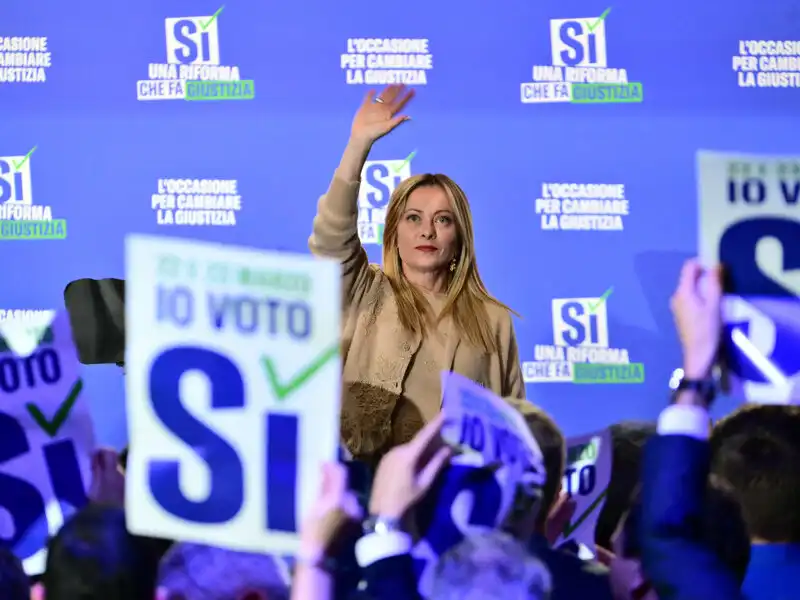
Young Voters Shake Italy’s Political Calm as Referendum Exposes Tensions for Giorgia Meloni

The March 22–23, 2026 constitutional referendum in Italy has sent political shockwaves through the nation’s leadership, leaving Prime Minister Giorgia Meloni’s government scrambling to contain the fallout. What was intended as a technical referendum on judicial reform abruptly became a referendum on the government itself, propelled by unexpectedly high turnout—especially among younger voters—who rejected the proposed reforms and significantly weakened Meloni’s political standing.
A Referendum Transformed into Political Defeat
Italy’s referendum centered on a series of constitutional amendments, collectively known as the “Nordio Reform,” named after Justice Minister Carlo Nordio, aimed at restructuring the judiciary. Proponents claimed the reform would modernize Italy’s justice system by separating the career paths of judges and prosecutors and overhauling the High Council of the Judiciary. However, critics argued the changes would erode judicial independence and open the door to political influence over magistrates.
Instead of passing quietly into law, the referendum became a highly charged political event, grounded in deep public dissatisfaction with the government’s broader agenda and leadership style. With turnout soaring to nearly 59 percent—well above expectations—the “No” camp won roughly 53.5 to 54 percent of the vote, defeating Meloni’s reform and delivering her first major electoral reversal since becoming prime minister.
Youth Voters at the Forefront
Perhaps the most striking aspect of the referendum was the role played by young voters. According to observers, the 18–29 age cohort overwhelmingly rejected the proposed reforms and turned out in high numbers, a surprising burst of political engagement that defied traditional voting patterns. One report noted that nearly 68 percent of voters in this age group voted “No,” a decisive margin that fueled broader opposition success.
This surge in youth participation did more than tip the scales; it exposed a generational divide in Italian politics. For years, young Italians have expressed frustration over economic stagnation, limited job prospects, and persistent corruption—issues that extend beyond the specifics of judicial restructuring. Many saw the referendum not simply as a legal reform measure but as a chance to voice disapproval of the political establishment.
Political analysts argue that this level of engagement among younger voters signals a deeper shift in civic attitudes. Rather than treating national political processes as distant or irrelevant, a growing segment of Italy’s youth appears willing to use their ballots to influence policy outcomes and challenge entrenched power structures. This phenomenon could have lasting implications for future elections, policy debates, and political organizing in Italy.
What the “No” Vote Really Signaled
While the referendum was officially about judicial reform, many Italians treated it as an impromptu vote on Meloni’s leadership. Multiple reports underscored that a significant portion of voters indicated they were motivated by dissatisfaction with the government rather than concerns about the technical merits of the reform itself.
The referendum defeat also signaled broader anxiety over the direction of Italian politics. Critics across the political spectrum warned that the proposed reforms threatened core democratic principles, while others accused the government of misusing constitutional mechanisms to consolidate power for its own benefit. Even some conservative commentators described the loss as a blow to Meloni’s authority and a reflection of public weariness with her political brand.
In many ways, the referendum became a proxy war over trust in political institutions, economic frustrations, and fears about Italy’s future. Polls suggested that young voters, in particular, saw the vote as a chance to express their discontent with a status quo that has delivered limited economic progress and persistent inequality.
Government Turmoil Following the Defeat
The political fallout from the referendum was swift and dramatic. Within days of the result, several high‑profile resignations rocked the governing coalition. Tourism Minister Daniela Santanchè stepped down after public calls from Meloni herself for her to resign, seeking to demonstrate accountability and reset public confidence.
Shortly thereafter, Maurizio Gasparri, the leader of Forza Italia in the Senate, also resigned his position amidst internal pressure and concerns about the government’s future direction. Others linked to the judicial reform effort—including subordinates in the justice ministry—resigned or were replaced in rapid succession.
These departures highlight mounting tensions within the coalition, which includes Meloni’s Brothers of Italy party, Forza Italia, and the League. While the coalition has vowed to maintain unity, internal disagreements over strategy and leadership direction have become more pronounced in the referendum’s aftermath.
Meloni’s Response and Strategic Challenges
Despite the setback, Meloni has publicly pledged to remain in office and continue governing, rejecting calls from some opposition figures to resign. She has framed the referendum defeat as a democratic exercise and emphasized respect for the electorate’s decision.
However, Meloni now faces a series of difficult strategic choices. Political analysts suggest that the referendum loss weakens her leverage both domestically and within Europe. With general elections due by 2027, pundits speculate whether Meloni will recalibrate her political agenda, consider early elections, or pursue reforms to the electoral system to consolidate her future prospects.
Domestically, Meloni must contend with the immediate task of stabilizing her government and addressing internal coalition fractures. Growing dissatisfaction among younger and centrist voters could compel her to shift focus away from contentious institutional reforms toward policies that resonate with broader public concerns such as economic growth, employment, public services, and climate issues.
Internationally, the defeat has implications for Italy’s standing within the European Union and among allied governments. The referendum was closely watched by European partners as a test of Meloni’s leadership and the durability of Italy’s right‑leaning coalition. The loss has likely dampened some of the confidence that Italy could act as a stable pillar of conservative politics on the continent, at least in the short term.
What This Means for Italy’s Youth and Future Elections
The referendum has underscored the political potential of young voters in shaping national outcomes. Italy’s youth turnout not only influenced this referendum but has also positioned young voters as a force that mainstream politics can no longer overlook or take for granted.
Political organizers and parties across the spectrum are now reexamining their engagement strategies with younger demographics. Key issues such as climate change, job security, education reform, and housing affordability are likely to take center stage in future campaigns, given their importance to younger Italians.
For Meloni and her coalition, this presents both a challenge and an opportunity. Engaging young voters on issues that matter to them—beyond constitutional questions—may be essential for regaining political momentum. Conversely, failure to address these concerns could deepen disaffection and erode support further, particularly among centrist and independent voters.
Broader Implications for Italian Democracy
The referendum’s outcome reflects a broader trend in European democracies, where institutional distrust and political fatigue are driving unexpected electoral outcomes. Italy’s experience demonstrates how a single policy referendum can rivet public attention and catalyze broader questions about governance, leadership accountability, and civic participation.
The referendum also reaffirmed the resiliency of Italian democratic processes. Voters exercised their rights in large numbers and expressed a clear position through the ballot box—challenging a sitting prime minister’s key policy initiative and reshaping Italy’s political conversation.
Whether this moment marks a lasting shift in Italy’s political landscape remains to be seen. But what is clear is that the voices of young Italians are now indelibly part of the country’s democratic trajectory, and political leaders will have to navigate this new reality as they prepare for future elections and governance challenges.
Citations
Reddit reports on youth turnout and motivations. https://www.reddit.com/r/europe/comments/1s6vkfh/young_voters_shake_italys_political_calm_as/
Giuffrida, Angela. Young voters shake Italy’s political calm as referendum exposes tensions for Giorgia Meloni. The Guardian. https://www.theguardian.com/world/2026/mar/28/young-voters-italy-referendum-giorgia-meloni
Italy votes on 2026 Italian constitutional referendum. Wikipedia. https://en.wikipedia.org/wiki/2026_Italian_constitutional_referendum
Referendum, i cittadini hanno detto No: il 53,7% boccia la riforma Nordio. Il Giorno. https://www.ilgiorno.it/politica/referendum-risultati-no-si-bocciata-riforma-nordio-kpvukuhu
Italian voters reject Meloni’s judicial reform in setback for Premier Giorgia Meloni. The Week. https://www.theweek.in/wire-updates/international/2026/03/23/italian-voters-reject-judicial-reform-in-setback-for-premier-giorgia-meloni.html
International reaction: “Meloni ora è più debole.” TGCom24. https://www.tgcom24.mediaset.it/elezioni/referendum-giustizia-2026/foto/-meloni-ora-e-piu-debole-la-vittoria-del-no-al-referendum-sui-quotidiani-esteri_110339219-202602k.shtml
Italian voters reject judicial reform: A setback for Meloni. Devdiscourse. https://www.devdiscourse.com/article/politics/3847870-italian-voters-reject-judicial-reform-a-setback-for-meloni
Italy’s Meloni government faces risky choices after referendum defeat. Reuters. https://www.reuters.com/world/europe/italys-meloni-faces-risky-choices-after-referendum-defeat-shakes-government-2026-03-24/
Italy’s tourism minister resigns amid turmoil. inkl News. https://www.inkl.com/news/italy-s-tourism-minister-resigns-amid-turmoil-from-referendum-failure
More resignations after referendum: Gasparri quits. inkl News. https://www.inkl.com/news/more-resignations-after-referendum-gasparri-quits-craxi-leads-forza-italia-in-senate