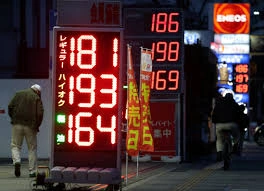
Japan to Release Oil Stocks as U.S. Urges “Buy American” on Energy Amid Iran War Shock

In a dramatic sign of how geopolitics is reshaping global energy markets, Japan has announced plans to begin releasing oil from its strategic stockpiles in response to supply threats posed by the ongoing U.S.–Israeli war with Iran. This move comes as energy officials, including in the United States, have been pushing allies to consider “buy American” energy supplies as a way to lessen dependence on Middle Eastern imports.
The decision by Tokyo to tap into its emergency reserves — the largest such release since the 1970s oil crisis — underscores the severity of global supply disruptions linked to the 2026 Strait of Hormuz crisis, which has effectively halted shipments through a key chokepoint for oil trade. Rising gasoline prices and fears of longer-term shortages have driven policymakers to take extraordinary steps, blending national energy security strategy with broader diplomatic pressures.
This article explains why Japan is releasing oil stocks, how it fits into global energy security efforts, the context of U.S. policy on energy sourcing, and what this means for consumers and markets.
Why Japan Is Releasing Oil From Strategic Reserves
Japan’s government has announced that it will begin drawing down approximately 80 million barrels of crude oil from its strategic reserves — roughly equivalent to 45 days of domestic supply — starting Monday, March 16, 2026, in reaction to disruptions caused by the war involving the United States and Israel in Iran.
The release will come from both private-sector and national stockpiles, with initial taps on 15 days’ worth of private reserves followed by state-held oil later in the month.
Japan’s strategic stockpiling system dates back to the energy shocks of the 1970s, after OPEC embargoes sent global prices soaring and exposed vulnerabilities in energy-dependent economies. Under agreements through the International Energy Agency (IEA), members maintain emergency reserves that can be deployed during major supply disruptions.
Since Japan relies on the Middle East for roughly 90% of its crude oil imports — with most shipments traversing the Strait of Hormuz, a vital maritime corridor — recent hostilities that have impacted shipping routes have elevated concerns over fuel supply and price stability.
The U.S. Calls for “Buy American” Energy
Alongside the Japanese announcement, U.S. officials have encouraged trading partners, including in the Indo-Pacific region, to source energy from American producers where possible. This push — often referred to in political rhetoric as a call to “buy American” — aims to strengthen U.S. energy exports while reducing reliance on supplies that could be disrupted by conflict in the Middle East.
At the Indo-Pacific Energy Security Forum in Tokyo, U.S. authorities highlighted growing cooperation between Asia-Pacific nations and American energy companies, including agreements worth billions of dollars for energy infrastructure and supply expansion. Japan has shown interest in increasing oil and liquefied natural gas (LNG) imports from the U.S. as part of broader diversification efforts.
The emphasis on U.S.-sourced energy is rooted in calls to ensure “secure and reliable” fuel deliveries that are less vulnerable to geopolitical volatility — a stark contrast to the current crisis affecting the Strait of Hormuz.
The International Energy Agency and Coordinated Stock Releases
Japan’s release of oil is part of a larger, coordinated effort led by the International Energy Agency (IEA) — a consortium of 32 member countries that includes Japan, the U.S., many European nations, and others — to mitigate the global impact of supply disruptions caused by the Iran war.
On March 11, 2026, the IEA announced the release of 400 million barrels of oil from emergency stockpiles — the largest coordinated release in its history — to help stabilize world markets. Japan’s contribution of 80 million barrels represents a significant portion of this effort.
The IEA said that emergency barrels are being made available immediately in Asia to address the region’s acute demand for crude amid constrained supplies.
However, experts caution that while release from reserves helps ease immediate pressure, stockpiles can only “buy time” and cannot fully replace lost supply if the conflict in the Middle East continues to disrupt shipping routes over the long term.
What This Means for Markets and Consumers
Japan’s stockpile release signals how deeply the energy crisis has penetrated major industrial economies. Markets have already shown heightened volatility due to the Middle East conflict, with oil futures prices spiking and fuel costs rising across several regions.
Releasing reserves can help dampen price volatility in the short term, but it also reduces the buffer that nations have against future disruptions. Japan’s planned release will reduce its strategic oil reserve levels by about 17%, drawing down a significant portion of its energy safety net.
For Japanese consumers and businesses, the short-term benefit of accessing additional fuel supplies could help ease sharp price increases at the pump. But industry analysts note that sustained disruptions could still push prices higher if global supply is constrained longer than stockpiles last.
National energy policies — including sourcing diversification, boosting domestic alternatives like LNG, or securing long-term contracts with non-traditional suppliers — may become more central in coming months as countries reassess their energy strategies.
Geopolitical Ramifications
Japan’s decision and the U.S. push for American energy tie into broader geopolitical dynamics:
1. Strait of Hormuz and Energy Security
The Strait of Hormuz crisis — a direct result of military tensions affecting at least 20% of global oil trade — remains the core stressor for energy markets. When oil cargoes route through this chokepoint, disruption can lead to widespread price instability.
Japan’s stock release reflects a proactive approach to buffer its economy from the fallout.
2. Diversification of Energy Suppliers
Japanese authorities are exploring alternative supply routes and partners, including from the U.S., Central Asia, South America, and Gulf states that could circumvent the strait’s logistical risk.
3. International Cooperation Through IEA and G7
Coordinated action by IEA members highlights shared vulnerability to global supply shocks and reinforces collective efforts to stabilize markets. This includes diplomatic negotiations where Japan helped persuade European partners to join stockpile releases, illustrating synergy among allied nations to support one another during energy crises.
Looking Ahead
While emergency stock releases serve as a stabilizing force, they are not a permanent substitute for secure and diverse energy supply chains. Continued conflict around the Middle East — especially around oil infrastructure and shipping lanes — could maintain pressure on markets, forcing nations to rethink long-term energy policies.
Japan’s move to release oil reserves and explore broader supplier relationships, including with the U.S., could shape regional energy geopolitics for years to come.
Conclusion
Japan’s plan to release oil from its strategic stockpiles amid war-driven supply shocks highlights how geopolitical conflicts can have ripple effects across global markets. With gasoline prices rising and supply routes under threat, Tokyo’s decision is both a tactical response and a reminder of just how interconnected modern energy systems are.
At the same time, the push from U.S. policymakers for allies to prioritize American energy sources reflects shifting global power dynamics in the energy sector. As markets adapt and governments weigh diversification strategies, the lessons of this crisis are likely to influence future energy security policies worldwide.
Citation and References
- https://www.reuters.com/business/energy/japan-release-oil-stocks-us-says-buy-american-2026-03-15/
- https://www.bworldonline.com/world/2026/03/15/736346/japan-to-release-oil-stocks-as-us-says-buy-american/
- https://www.straitstimes.com/asia/east-asia/japan-to-release-oil-stocks-as-us-says-buy-american?ref=latest-headlines
- https://www.reuters.com/business/energy/asia-pacific-allies-ink-57-billion-deals-with-us-companies-burgum-says-2026-03-15/
- https://www.straitstimes.com/asia/iea-says-oil-from-emergency-stocks-to-flow-immediately-in-asia
- https://www.reuters.com/business/energy/europe-repaid-tokyo-favour-by-supporting-oil-stock-release-japan-minister-says-2026-03-14/
- https://www.reddit.com/r/newsPH/comments/1rrlu0k/japan_will_release_about_80_million_barrels_of/
- https://en.wikipedia.org/wiki/2026_Strait_of_Hormuz_crisis
- https://info.japantimes.co.jp/pdf/20220304.pdf