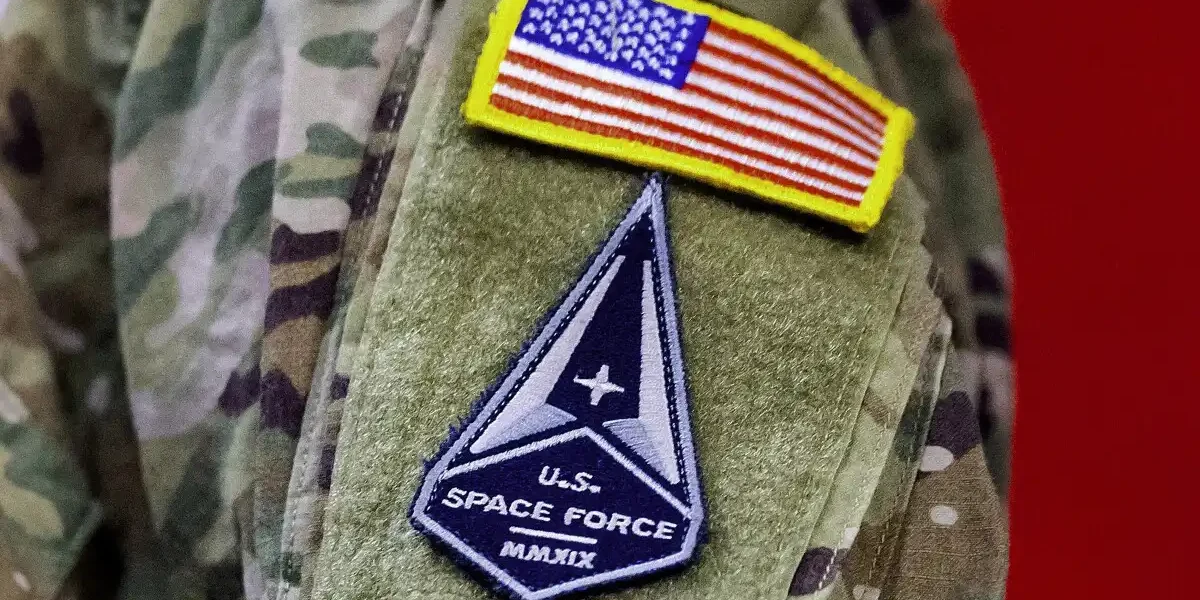
Hackers Breach Senior U.S. Space Force Official’s Instagram Account and Post Iranian Propaganda: What Happened and Why It Matters

In an era where digital platforms are as strategically important as physical infrastructure, even a single compromised social media account can become a geopolitical flashpoint. A recent incident involving a senior figure linked to the United States Space Force has raised serious concerns about cybersecurity readiness, foreign influence operations, and the vulnerability of high-ranking defense personnel online.
Reports indicate that hackers briefly gained unauthorized access to an Instagram account associated with a senior Space Force official and used it to publish content aligned with pro-Iran messaging and anti-U.S. sentiment. While the posts were reportedly removed quickly, the breach has already triggered alarm across defense and cybersecurity communities.
This incident is not just about a hacked social media account. It sits at the intersection of national security, information warfare, and digital identity protection in an increasingly hostile cyber environment.
How the Instagram Breach Unfolded
According to early reports from cybersecurity monitoring groups and news coverage, the incident involved unauthorized access to a verified or high-profile Instagram account linked to a senior member of the U.S. Space Force ecosystem.
The attackers allegedly posted content that included pro-Iran messaging and criticism of U.S. military operations. The posts appeared temporarily before being taken down, either by platform moderators or account recovery actions taken by security teams.
Although full technical details have not been publicly released, cybersecurity experts suggest that the breach likely occurred through one of the most common attack vectors: credential compromise. This could include phishing, reused passwords, or exploitation of third-party apps connected to the account.
What makes this case particularly sensitive is not just the hack itself, but the symbolic target. The Space Force represents a core pillar of U.S. military modernization and space defense strategy, making any breach involving its personnel highly scrutinized.
Why Hackers Target Military-Linked Social Media Accounts
Social media accounts tied to military officials are increasingly viewed as high-value targets in modern cyber conflict. Even if these accounts are not directly used for operational communication, they provide attackers with a powerful platform for psychological operations and misinformation.
In this case, the messaging allegedly posted on the compromised account aligns with what analysts often describe as influence operations—designed not just to spread propaganda, but to create confusion, embarrassment, or distrust in institutions.
Cybersecurity analysts note several key motivations behind such attacks:
First, visibility. A hacked account belonging to or associated with a senior defense figure can quickly attract global attention, amplifying the reach of the attacker’s message far beyond traditional hacking methods.
Second, psychological impact. Even a brief breach can damage perceptions of security competence within military institutions, especially when the target is a high-profile branch like the United States Space Force.
Third, geopolitical signaling. When messaging includes references to international tensions or adversarial narratives, it can be interpreted as part of broader state-linked or politically motivated cyber activity.
The Alleged Iranian Propaganda Angle
One of the most controversial aspects of this incident is the reported nature of the content posted during the breach. The messages were described as pro-Iran and critical of U.S. foreign policy.
While no official attribution has been conclusively confirmed, cybersecurity incidents involving politically charged messaging are often examined through the lens of “advanced persistent threat” groups. These groups are sometimes linked—directly or indirectly by analysts—to nation-state actors or politically motivated hacking collectives.
Iran has been repeatedly identified in global cybersecurity reports as an active participant in cyber influence campaigns, particularly in response to geopolitical tensions with the United States. However, attribution in cyberattacks is notoriously difficult, and experts caution against jumping to conclusions without forensic evidence.
In many cases, hackers intentionally plant misleading indicators to disguise their identity, making it appear as though another group or country was responsible.
National Security Concerns Beyond the Account Itself
The breach raises broader concerns about how securely military personnel manage digital identities outside of official government systems.
Even though social media platforms like Instagram are not classified communication channels, they are often linked to personal or semi-professional identities of individuals who hold sensitive roles. If attackers can gain access to these accounts, they can potentially:
- Spread disinformation under a trusted name
- Damage institutional credibility
- Target contacts connected to the account
- Test security weaknesses for future, more serious intrusions
Cybersecurity specialists emphasize that modern information warfare does not always require accessing classified systems. Sometimes, the goal is simply to exploit perception and trust.
The fact that a senior Space Force-linked account was compromised underscores how personal cybersecurity hygiene is now inseparable from national security risk.
Response from Cybersecurity and Defense Communities
Following the incident, cybersecurity professionals and defense analysts have reiterated long-standing warnings about the vulnerability of social media accounts tied to government officials.
The incident has reportedly prompted internal reviews of account security practices, including password management policies, two-factor authentication enforcement, and third-party app permissions.
Government cybersecurity bodies such as the Cybersecurity and Infrastructure Security Agency (CISA) have repeatedly advised public officials to strengthen account protection measures due to increasing attempts at credential theft and phishing campaigns.
You can explore general cybersecurity guidance from official sources such as:
While these agencies have not publicly confirmed all details of this specific breach, they consistently highlight social engineering attacks as one of the most common threats facing government personnel.
The Role of Social Media in Modern Information Warfare
This incident highlights a growing reality: social media platforms are now part of the global information battlefield.
Platforms like Instagram, X, Facebook, and TikTok are not just tools for communication—they are also channels where narratives can be shaped, distorted, or weaponized.
When hackers gain access to high-profile accounts, even briefly, they can inject narratives that spread rapidly before being corrected. In some cases, screenshots of deleted posts continue circulating long after the original content is removed, extending the lifespan of the attack.
This creates what experts call a “digital residue effect,” where misinformation continues influencing perception even after the breach is resolved.
For military organizations like the United States Space Force, this presents a unique challenge: balancing openness and public communication with operational security and reputational risk.
Attribution Challenges and Cyber Fog of War
One of the most difficult aspects of incidents like this is determining who is actually responsible.
Cyber attribution often involves analyzing IP addresses, malware signatures, language patterns, timing, and infrastructure links. However, none of these indicators are definitive on their own.
Hackers frequently use VPNs, proxy servers, and compromised devices to mask their origins. In politically sensitive cases, false flags are also common.
As a result, cybersecurity analysts often describe these situations as part of a “fog of cyber war,” where certainty is limited and interpretations can vary widely depending on available evidence.
Until a full forensic investigation is completed and publicly released, any claims about specific state involvement remain speculative.
What This Means for Future Cybersecurity Policy
This incident is likely to contribute to ongoing discussions about tightening cybersecurity standards for government personnel, particularly those in defense-related roles.
Potential policy directions include:
Stronger enforcement of multi-factor authentication across all personal and professional accounts
Mandatory cybersecurity training focused on phishing and social engineering
Restrictions on linking personal accounts to professional identities in sensitive roles
Improved monitoring of account anomalies tied to government personnel
The key takeaway is that cybersecurity is no longer just an IT issue—it is a national security priority that extends into personal digital behavior.
Conclusion: A Small Hack with Big Implications
At first glance, the breach of an Instagram account may seem like a minor incident. But when the target is linked to a senior member of the United States Space Force and the content involves politically charged messaging, the implications become far more serious.
This event underscores a critical reality of modern geopolitics: the battlefield is no longer confined to land, sea, air, or space—it also exists online, in the fragile infrastructure of social media platforms and digital identities.
Even brief intrusions can carry outsized consequences, shaping narratives, raising diplomatic tensions, and exposing vulnerabilities that adversaries are quick to study and potentially exploit again.
As investigations continue, one thing is clear: the line between cybersecurity and national security has never been thinner.
Citation Section
Cybersecurity and infrastructure security guidance:
Cybersecurity and Infrastructure Security Agency (CISA)
U.S. defense cybersecurity context and policy reference:
National Security Agency (NSA) Cybersecurity Guidance
General reporting and cybersecurity news context (ongoing coverage on incidents of this nature):
Reuters – Technology and Cybersecurity News
International news coverage and global security reporting:
BBC News – Technology Section