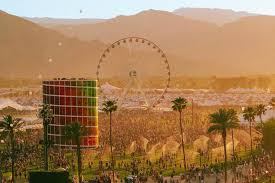

At moments tied to the Coachella Valley Music and Arts Festival, public opinion no longer develops in stages—it splits immediately. In 2026, the first response to any visible cultural moment is not agreement or analysis, but division. Within minutes, audiences separate into parallel camps: support and criticism, celebration and skepticism, admiration and backlash. The gap between those positions is now measured in seconds, not days.
What’s changed is the speed of interpretation. In earlier media cycles, a moment would pass through a shared sequence—first observation, then reporting, then commentary, and finally opinion. Now, those stages collapse into one. As soon as something appears on screen, interpretation begins simultaneously in multiple directions. There is no waiting period for consensus to form, because consensus is no longer the default outcome.
Supporters and critics are often reacting to the same clip, but they are not experiencing the same version of it. Support tends to focus on intent, emotion, or context—what the moment represents, how it feels, or what it adds to a broader narrative. Criticism tends to focus on execution, optics, or perceived inconsistency—what it lacks, what it contradicts, or what it disrupts. Both are immediate, both are confident, and both spread at the same speed.
This split is amplified by platform structure. Algorithms prioritize engagement, not agreement. Strong reactions—positive or negative—travel faster than neutral ones. That means polarization is not just a social outcome; it is a distribution advantage. The more divided a response becomes, the more visible it gets, reinforcing the cycle of instant divergence.
At large-scale cultural events like Coachella, where multiple high-visibility moments occur within short timeframes, this effect multiplies. A single performance, appearance, or interaction doesn’t generate one conversation—it generates competing interpretations that evolve in parallel. One group builds narratives of success and impact, while another dissects flaws or contradictions. Neither waits for the other to settle.
The role of clips is central to this acceleration. Short-form content removes context, and without full context, interpretation becomes more flexible. A two-hour performance becomes a series of isolated fragments, each open to different readings. Supporters and critics often select different fragments as evidence, reinforcing their opposing perspectives rather than converging toward shared understanding.
There is also an emotional dimension to this speed. Immediate reactions are often less about the event itself and more about identity expression. Aligning with support or criticism becomes a way of signaling values, taste, or cultural positioning. The moment becomes a canvas for projection, rather than a shared object of analysis.
What makes this dynamic especially unstable is how quickly positions harden. Because reactions form so fast, they often solidify before additional context can emerge. Once a stance is publicly expressed and circulated, it becomes part of the broader discourse ecosystem, making reversal less likely and reinforcing division over time.
Even official clarification or later analysis struggles to close the gap. By the time more detailed information arrives, the initial split has already been amplified through repetition. Each side has already built its own version of the moment, supported by selective clips, commentary, and community reinforcement.
Ultimately, how fast public opinion turns in 2026 reflects a deeper shift in attention culture. Reaction is no longer the second step after understanding—it is the first step of engagement. And once that split happens, the conversation doesn’t move toward a single truth. It expands into multiple versions of it, all existing at the same speed.