Trump Rejects Calls to Slow AI as Democrats Turn Technology Into a Midterm Election Issue

Artificial intelligence is quickly becoming more than a technology story. As the United States races to expand its AI industry, the issue is moving directly into American politics, with President Donald Trump rejecting calls for a significant slowdown while Democrats increasingly argue that the federal government needs stronger safeguards.
The political fight is arriving at an important moment. With the 2026 midterm elections approaching, candidates and lawmakers are looking for issues that could influence voters beyond the traditional debates over the economy, immigration and healthcare. AI is emerging as one of those issues because its effects are no longer limited to technology companies. Questions about jobs, national security, misinformation, data centers, energy consumption and the future of work are increasingly becoming political concerns.
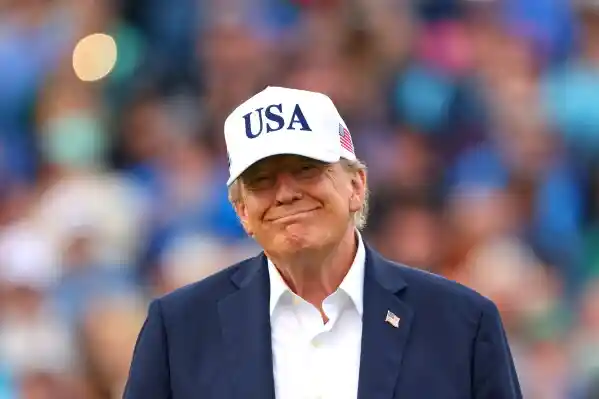
Trump’s position is straightforward: the United States cannot afford to fall behind China in artificial intelligence. During remarks in Ireland, the president pushed back against warnings about the dangers of rapidly advancing AI and argued that maintaining American leadership should be a priority. Reuters reported that Trump dismissed some of the more alarming predictions surrounding AI and emphasized the importance of keeping the United States ahead of China.
That position is setting up a potentially important political confrontation ahead of the midterms.
Trump Says the United States Cannot Afford to Lose the AI Race
Trump has repeatedly presented artificial intelligence as a strategic competition between the United States and China. His argument is that excessive regulation could slow American companies while allowing Chinese technology firms to move ahead.
The president has acknowledged that some regulation may be necessary, but he has rejected the idea that the United States should significantly slow the development of advanced AI systems. The Associated Press reported that Trump emphasized the need to maintain America’s competitive advantage and offered no specific proposal for imposing broad new restrictions on AI development.
The administration’s approach reflects a broader philosophy that technological innovation should not be burdened by regulations that could make American companies less competitive.
That argument has considerable support among technology executives and investors who believe the United States is in a global race for leadership in artificial intelligence. From that perspective, slowing development could create an opening for China and potentially weaken America’s economic and national security position.
But the political debate is becoming more complicated because some of the strongest warnings about AI are now coming from inside the technology industry itself.
AI Safety Concerns Are Coming From Tech Leaders
One of the most unusual aspects of the current debate is that some prominent technology executives are calling for greater caution.
Anthropic CEO Dario Amodei has urged policymakers and AI companies to slow aspects of advanced AI development and establish stronger safety measures. His warnings have gained attention because Anthropic is one of the companies competing directly in the advanced AI industry.
Other technology leaders, including OpenAI CEO Sam Altman and Elon Musk, have expressed support for greater caution and safety measures. The Guardian reported that several major figures in the AI industry have backed calls for additional safeguards as concerns about increasingly powerful AI systems grow.
This creates an unusual political situation.
For years, the debate over technology regulation often placed government officials on one side and technology companies on the other. Now, parts of the technology industry are themselves warning that AI development could move too quickly.
The disagreements are not necessarily about whether AI should exist or whether technological innovation should stop. Instead, the argument is increasingly about how quickly advanced systems should be developed, how they should be tested, who should oversee them and what safeguards should be required before increasingly powerful models are deployed.
Democrats Are Turning AI Into a 2026 Midterm Issue
Democrats see an opportunity in the growing concerns surrounding artificial intelligence.
The Washington Post reported that Democrats are increasingly criticizing the Trump administration’s hands-off approach to AI regulation as the midterm elections approach.
That criticism gives Democrats several potential political arguments.
They can focus on workers who fear that AI could replace jobs, families worried about children interacting with increasingly sophisticated technology, consumers concerned about deepfakes and misinformation, and communities dealing with the environmental and infrastructure demands created by large data centers.
AI also gives Democrats a way to discuss government oversight without limiting the conversation to traditional technology policy.
The central question becomes: Who should be responsible if powerful AI systems cause serious harm?
Democrats are increasingly arguing that government has a role in establishing rules before the technology advances too far. Republicans and technology advocates counter that excessive government intervention could prevent American companies from competing effectively against China.
That disagreement could become a defining technology debate of the 2026 election cycle.
Why AI Is Suddenly a Political Issue
Artificial intelligence has been discussed in Washington for years, but its political importance has grown as the technology has become more visible in everyday life.
People are using AI to write, create images, analyze information, search for answers and automate business tasks. At the same time, companies are investing billions of dollars in computing infrastructure and data centers.
The consequences are becoming harder for politicians to ignore.
A Washington Post analysis published in August found that AI or data-center policy was appearing in a significant share of 2026 House, Senate and gubernatorial races. The issue is increasingly connected to concerns about employment, economic opportunity and the local impact of AI infrastructure.
That means AI is no longer simply something discussed in Silicon Valley or Washington technology hearings.
It is becoming part of conversations about whether a community wants a massive data center nearby, whether workers will lose employment to automation, whether students should use AI in schools and whether companies should be held responsible for AI-generated misinformation or harmful content.
The China Argument Is Central to Trump’s Position
The competition with China is one of the strongest arguments behind Trump’s resistance to an AI slowdown.
Trump’s position is that America cannot voluntarily reduce its technological momentum while another major power continues developing advanced AI.
The president has repeatedly emphasized the importance of American leadership in artificial intelligence, framing the issue as both an economic and national security competition.
That argument has resonance beyond partisan politics.
Advanced AI could influence military technology, cybersecurity, scientific research, manufacturing, financial markets and economic productivity. Maintaining leadership could therefore have consequences extending far beyond the technology sector.
But critics argue that competition can also create dangerous incentives.
If both the United States and China believe they must move faster than the other side, neither may want to slow down independently. That creates a difficult question for policymakers: how can countries compete technologically while still establishing meaningful safety standards?
Former Anthropic researcher Jacob Coxon has argued for international coordination, while Amodei has also raised concerns about the challenges created by an uncontrolled race between major AI powers.
The debate therefore extends beyond American politics.
It is also about whether global AI development can be governed responsibly when governments and companies are competing for technological dominance.
The Republicans’ Argument: Regulation Could Hurt American Innovation
Trump’s approach is supported by Republicans and other technology advocates who argue that aggressive regulation could have unintended consequences.
Their concern is that restrictive rules could make it more expensive or difficult for American companies to develop new AI systems.
If companies face substantially heavier regulations in the United States than competitors elsewhere, they could potentially move investment, research or operations to countries with fewer restrictions.
The China issue makes that argument even more politically powerful.
Supporters of a lighter regulatory approach argue that the United States should build the strongest AI industry possible and then establish reasonable safeguards without preventing innovation.
The administration has also pursued policies intended to encourage American AI development and limit regulatory barriers. The broader strategy has emphasized American technological leadership rather than placing broad restrictions on AI advancement.
For Republicans, the political message is therefore relatively simple: America should lead, not voluntarily slow down.
Democrats Are Warning About the Cost of Moving Too Fast
Democrats are approaching the issue from a different direction.
Their argument is that technological leadership should not come at the expense of public safety, workers or consumers.
One concern is employment. AI systems are becoming increasingly capable of performing tasks that once required human workers, from customer service and content production to software development and administrative work.
Although AI could also create new industries and jobs, the transition could be disruptive.
Democrats can therefore frame AI regulation as a labor issue as much as a technology issue.
Another concern involves misinformation. As AI-generated images, videos and audio become more convincing, voters may face greater difficulty distinguishing authentic information from fabricated material.
That creates obvious political implications during an election year.
If deepfakes or AI-generated misinformation become widespread, policymakers may face pressure to establish rules concerning political advertising, election interference and transparency.
AI Could Become a Major Election Talking Point
The political significance of AI may ultimately depend on whether voters see it as an abstract technology issue or something that directly affects their lives.
For some voters, AI may represent opportunity.
It could help small businesses automate tasks, allow individuals to create content, improve productivity and open new career paths.
For others, AI may represent uncertainty.
Workers may worry about job security. Parents may worry about misinformation and online safety. Homeowners may be concerned about the energy and water demands of large data centers. Consumers may wonder how companies are using their personal information to train AI systems.
Politicians who can connect these concerns to everyday life may have an advantage.
This is why the 2026 midterm debate could be less about technical details and more about a basic political question: Should the government let AI companies move quickly and address problems as they appear, or should stronger rules be established before the technology advances further?
The Political Divide May Not Be as Simple as It Looks
Despite the growing partisan conflict, the AI debate does not fit neatly into traditional Republican-versus-Democrat categories.
Some technology executives who support stronger safety measures have political affiliations or business interests that do not align neatly with either party. Meanwhile, some Republicans have expressed concerns about the social consequences of AI, while some Democrats have emphasized the importance of American technological competitiveness.
Even within the technology industry, there is disagreement about what responsible AI regulation should look like.
Some want stronger government oversight. Others favor voluntary industry standards. Some advocate international agreements, while others argue that national security considerations make such agreements difficult.
That complexity could make AI policy especially difficult for Congress.
Lawmakers are being asked to regulate a technology that is developing rapidly and whose long-term effects remain uncertain.
The Stakes Could Extend Beyond the 2026 Midterms
The current fight over AI is unlikely to disappear after the 2026 elections.
Regardless of which party gains control of Congress, artificial intelligence will remain one of the most consequential technology and economic issues facing the United States.
The government will eventually have to address questions involving AI safety, employment, intellectual property, privacy, national security and competition with China.
The challenge will be finding a balance.
A government that moves too slowly could struggle to respond to serious risks. A government that regulates too aggressively could potentially limit innovation or weaken America’s position in a highly competitive global industry.
Trump’s refusal to support a major AI slowdown puts him firmly on one side of that debate.
Democrats are increasingly moving toward the other.
Trump’s AI Strategy Creates a New Political Battle
Trump’s rejection of calls to slow AI development has transformed what might once have been a technology-industry argument into a much larger political fight.
The president sees artificial intelligence leadership as a strategic race that the United States cannot afford to lose. Democrats increasingly see the rapid development of AI as an issue requiring stronger safeguards and government oversight. Meanwhile, some of the industry’s most prominent executives are warning that technological progress could create serious risks if safety measures fail to keep pace.
As the 2026 midterm elections approach, voters will have to decide which argument they find more convincing.
Should America move as quickly as possible to maintain its lead over China?
Or should Washington slow down enough to establish stronger protections before increasingly powerful AI systems become even more difficult to control?
That debate is only beginning.
What makes it politically significant is that artificial intelligence is no longer simply about the future. It is already affecting jobs, businesses, elections, infrastructure and everyday life.
And with Democrats increasingly making AI part of their campaign message, Trump’s decision to resist a major slowdown could become one of the administration’s most closely watched technology policy battles heading into the midterms.
SEO Information
Primary SEO keyword: Trump AI regulation
Secondary keywords: Trump AI slowdown, Trump artificial intelligence policy, AI regulation 2026, Democrats AI regulation, 2026 midterm elections, Trump China AI competition, AI political issue, artificial intelligence politics, US AI policy, AI safety
SEO title: Trump Rejects AI Slowdown as Democrats Make It a 2026 Midterm Issue
Meta description: Trump rejects calls to slow artificial intelligence development as Democrats push for stronger AI regulation. Here’s why AI is becoming a major 2026 midterm issue.
Suggested URL slug: trump-ai-slowdown-democrats-midterm-election-2026
Citation Section
Washington Post. “Trump Resists AI Slowdown as the Political Tide Turns.”
Read the Washington Post report
Reuters. “Trump Says ‘Very Negative Forces’ Raising Exaggerated Concerns Over AI.”
Read the Reuters report
Associated Press. “Trump Downplays the Need to Check AI Development and Says He Doesn’t Want to Cede Edge to China.”
Read the Associated Press report
The Guardian. “OpenAI Boss and Elon Musk Back Calls to Put Brakes on ‘Reckless’ AI Development.”
Read The Guardian report
Washington Post. “The Unexpected Issue Dividing Parties and Midterms Candidates.”
Read the Washington Post analysis