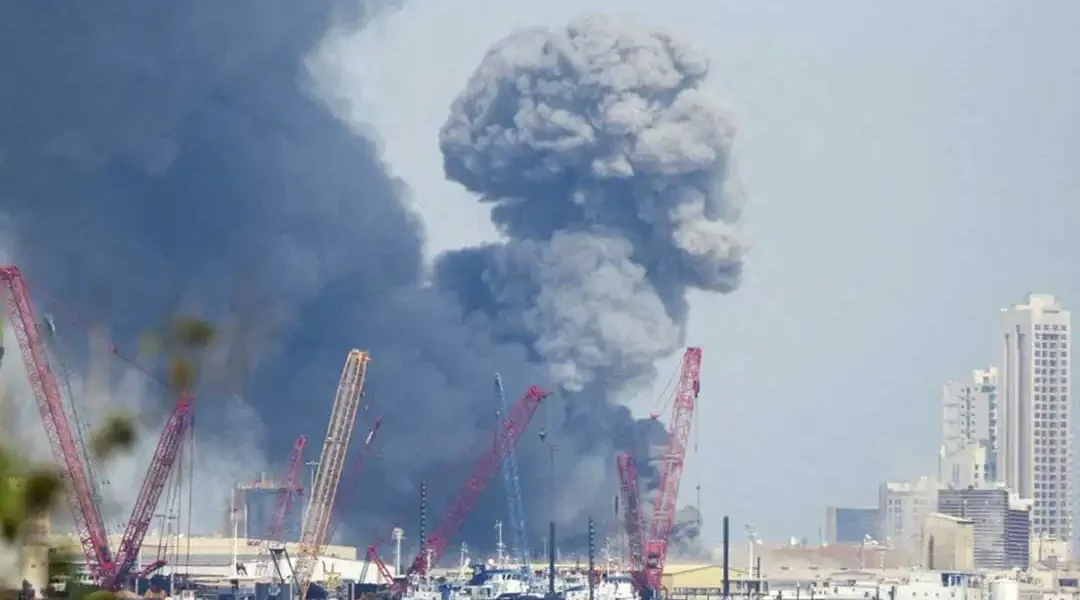

On 28 February 2026, the United States and Israel launched coordinated military strikes against Iran’s military infrastructure and leadership — a moment that marked the beginning of a major escalation in Middle East tensions that continues to reverberate across the region and the world. The resulting conflict has expanded far beyond those initial airstrikes, involving multiple countries and military fronts, raising fears of a protracted war with global consequences.
This article breaks down the origins of the conflict, how it has spread across the Middle East, key developments so far, and what this means for regional stability and global geopolitics.
The Start: US and Israeli Strikes on Iran
The current conflict — sometimes referred to as the 2026 Iran war — began when the United States and Israel launched a series of coordinated military strikes on Iranian territory on 28 February 2026. The operation involved air, sea, and missile attacks on Iranian military sites, leadership targets, and infrastructure, including the reported killing of Iran’s Supreme Leader Ayatollah Ali Khamenei and other senior officials.
Israeli forces called their part of the operation Operation Lion’s Roar, emphasizing the intention to damage Iran’s defensive capabilities and its ability to project military power. The United States supported these strikes as part of a broader strategy to degrade Iran’s nuclear program and missile infrastructure.
The Iranian government swiftly denounced the strikes as a violation of its sovereignty and a dangerous escalation. Tehran vowed retaliation, and within hours it began launching ballistic missiles, drones, and other attacks against Israeli territory, US military bases, and allied nations in the region.
Iran’s Retaliation and Regional Escalation
Missile and Drone Attacks Across the Middle East
Iran’s response to the initial strikes was immediate and widespread. The Islamic Revolutionary Guard Corps (IRGC) and Iranian military forces launched hundreds of ballistic missiles and drones aimed at targets inside Israel, including major cities and military installations.
Iranian missiles have also struck or threatened other locations linked to US forces in the Gulf region, including Bahrain, Kuwait, Qatar, Saudi Arabia, Turkey, and the United Arab Emirates. These attacks have expanded the conflict beyond the immediate Israel–Iran front, forcing multiple countries to mobilize defenses or intercept incoming threats.
In Jordan, for example, Iranian drones and missiles crossed into Jordanian airspace and were intercepted by combined Jordanian and US air defenses, resulting in civilian injuries from falling debris.
Attacks on Israel and Civilian Impact
Iran’s missile strikes on Israel have caused significant civilian disruption. On 22 March 2026, ballistic missiles struck southern Israeli towns including Arad and Dimona, where at least 31 people were injured, including children. Multiple buildings were damaged, and further Iranian strikes were reported in Tel Aviv.
Israeli air defenses have intercepted many incoming projectiles, but the continued barrage has underscored the intensity of the tit‑for‑tat nature of this conflict.
Broader Regional Spread
Lebanon and Hezbollah
Along the Israel–Lebanon border, long‑standing tensions have erupted into active conflict as Hezbollah — a powerful Lebanese militia allied with Iran — has engaged Israeli forces. This has expanded the conflict into the 2026 Lebanon war, with cross‑border shelling, missile exchanges, and civilian casualties on both sides.
Gulf States and Shared Defense
Gulf Cooperation Council (GCC) nations, including Saudi Arabia, the United Arab Emirates, and Qatar, have heightened their defensive postures and coordinated with US and allied forces to protect key energy infrastructure, airspace, and strategic military assets.
Several Gulf states have also faced Iranian missile threats or drone incursions, leading to increased air defenses and preventative military measures.
Jordan’s Defensive Role
In addition to intercepting Iranian missiles and drones, Jordan’s armed forces engaged several incoming threats along its borders, underscoring how neighboring states have been drawn into the conflict’s military dynamics.
Evacuations and Humanitarian Impact
The spread of hostilities has forced mass evacuations within and around conflict zones. Civilians, foreign nationals, and diplomatic personnel have been moved from high‑risk areas in Iran and allied states to safer locations. Governments, including Western nations, have organized repatriation flights and closed airspace in some regions due to safety concerns.
The disruption of daily life, commerce, and essential services has compounded the humanitarian crisis, adding pressure to regional and international relief organizations.
Economic and Oil Market Impacts
One of the most significant indirect consequences of the conflict has been its effect on global energy markets. The Strait of Hormuz — a crucial chokepoint for world oil supplies — has seen disruptions as shipping routes and tanker traffic have been halted or rerouted amid security concerns.
The threat to energy infrastructure has contributed to rising oil prices and heightened concerns about global economic stability. The potential for long‑term energy supply instability remains a key concern for markets and policymakers worldwide.
International Response and Diplomatic Tensions
Global leaders have reacted with both condemnation and calls for restraint. Some Western governments have expressed support for the US and Israeli justification of strikes, while others, including Russia and China, have criticized the operation as a violation of sovereignty and an escalation that threatens broader regional stability.
International diplomatic efforts to de‑escalate have been ongoing, but the intensity of military engagement on multiple fronts has made progress elusive.
US Domestic and Military Considerations
Within the United States, officials have maintained that the military objectives remain focused on degrading Iran’s nuclear capabilities and defensive capacities. Secretary of Defense Pete Hegseth emphasized that US goals have not changed since the strikes began, despite rising casualties and ongoing combat operations.
However, the conflict has also drawn domestic political debate about the scope of US military involvement, the potential for open‑ended engagement, and the broader geopolitical strategy in the Middle East.
Travel and Security Advisories
The US Department of State has issued a global travel advisory, warning American citizens to exercise heightened caution due to the conflict’s unpredictability and potential threats to diplomatic missions even outside the Middle East.
Such advisories reflect how the conflict’s risks extend beyond military targets to civilian and international operations worldwide.
Where the Conflict Stands Today
As of late March 2026, the war continues with significant developments:
- Iranian missile and drone strikes have hit multiple fronts, from Israel to Gulf states.
- Hostilities have expanded to allied militias and border conflicts with groups like Hezbollah.
- Strategic maritime routes like the Strait of Hormuz remain under threat, affecting global oil market stability.
- International diplomatic efforts have so far failed to produce a ceasefire.
The sustained violence and broad geographic scope highlight how the conflict that began with US and Israeli strikes on Iran has evolved into a wider Middle East crisis with serious implications for geopolitical stability, energy markets, and civilian safety.
What Comes Next?
Predicting the future of this conflict is challenging. Diplomatic pressure, international mediation, and battlefield developments will all play a role in shaping whether the conflict de‑escalates or continues to expand. Analysts warn that without significant negotiations and security guarantees, the region could remain embroiled in conflict for months — or even years.
What remains clear is that the consequences extend far beyond Iran’s borders, reshaping security dynamics across the Middle East and challenging global leaders to find a path back to stability.
Citation Links
News Coverage & Ongoing Conflict
- Al Jazeera – Map shows how attacks have evolved in the US–Israel war on Iran: https://www.aljazeera.com/news/2026/3/16/map-shows-how-16-days-of-attacks-have-evolved-in-us-israel-war-on-iran
- Reuters – How many people have been killed in the US‑Israeli war on Iran?: https://www.reuters.com/world/middle-east/how-many-people-have-been-killed-us-israel-war-iran-2026-03-17/
- Reuters – Scores hurt after Iranian missiles hit Israeli desert towns: https://www.reuters.com/world/middle-east/scores-hurt-after-iranian-missiles-hit-israeli-desert-towns-2026-03-22/
- Al Jazeera – Multiple Arab states targeted after strikes: https://www.aljazeera.com/news/2026/2/28/multiple-gulf-arab-states-that-host-us-assets-targeted-in-iran-retaliation
- Reuters – Iranian missiles shake Gulf cities: https://www.reuters.com/world/middle-east/iran-fires-missiles-gulf-arab-states-one-killed-abu-dhabi-2026-02-28/
Background & Analysis
- Wikipedia – 2026 Iran war: https://en.wikipedia.org/wiki/2026_Iran_war
- Wikipedia – Operation Lion’s Roar (US‑Israel military strikes): https://en.wikipedia.org/wiki/Operation_Lion%27s_Roar_%282026_Israeli%E2%80%93United_States_military_action_against_Iran%29
- UK Parliament Research Briefing – US‑Israel strikes on Iran: https://researchbriefings.files.parliament.uk/documents/CBP-10521/CBP-10521.pdf
- Market Commentary PDF – Perspective on the conflict in Iran: https://ccmg.com/wp-content/uploads/2026/03/2026-03-02-Market-Update-Perspective-on-the-Conflict-in-Iran.pdf
- Statement – Human Rights Now protesting strikes: https://hrn.or.jp/eng/wp-content/uploads/2026/03/Iran_Statement_Mar.1.2026.pdf