Europe Housing Crisis Protests Spread to Lisbon and Milan as Rising Living Costs Fuel Public Anger

Protests over the housing crisis and rising living costs are spreading across Europe, with demonstrations in Lisbon, Portugal, and Milan, Italy, highlighting growing frustration over affordability, wages, and access to essential services. The latest rallies reflect mounting pressure on governments as residents struggle with housing expenses and household budgets while demanding policies that better address their everyday needs.
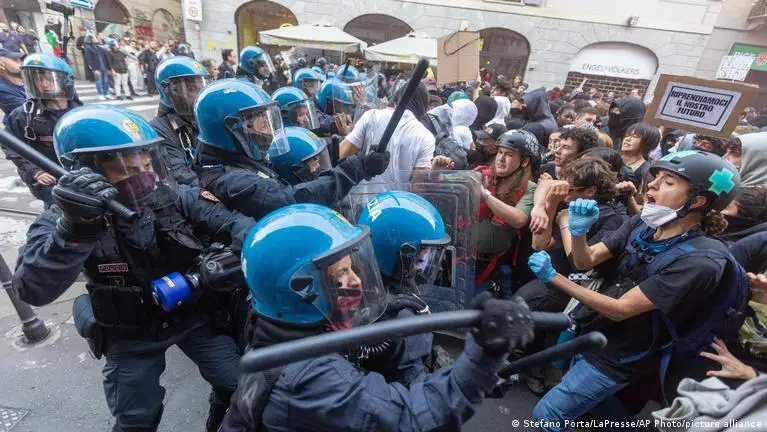
According to a report published by The Guardian on October 18, 2026, hundreds of protesters established a tent camp in Lisbon’s Rossio Square to demand action on housing costs, while a demonstration in Milan escalated into clashes between masked individuals and police. The events form part of a broader wave of protests that has also affected Spain and France, where housing affordability, education, and economic inequality have become major public concerns.
The demonstrations have drawn attention to an increasingly difficult question facing European cities: how can residents afford to live in the places where they work, study, and build their futures? For many protesters, the issue extends beyond rent or property prices. It also concerns wages, pensions, public services, and whether ordinary households can maintain a reasonable standard of living.
Although the demonstrations share some common economic concerns, their circumstances and outcomes differ. Lisbon’s tent encampment has focused heavily on access to housing, while the Milan march began peacefully before violence and property damage prompted a police response. Together, the events illustrate the growing political significance of the European housing crisis and the wider cost-of-living debate.
Lisbon Housing Crisis Protesters Set Up Tent Camp
In Lisbon, protesters gathered in Rossio Square, a central public space in the Portuguese capital, and established a tent camp to demand stronger action on the housing crisis. The gathering followed a demonstration that drew thousands of people nationwide, according to The Guardian.
The encampment brought the housing debate into one of Lisbon’s busiest areas. Protesters said they intended to remain overnight, singing and gathering around the statue of King Pedro IV as they called for measures to make housing more accessible.
For participants, the issue is deeply personal. Rising housing costs can make it increasingly difficult for renters to remain in their neighborhoods, for young adults to move out independently, and for workers to live near their jobs. Residents who have spent years building their lives in Lisbon may also face pressure when rents rise faster than their incomes.
One protester, Elena Costa, a 46-year-old social assistant, told The Guardian that people who contribute to the country through their work and taxes are losing rights, particularly the right to housing. Her description of the situation as suffocating reflected the frustration felt by demonstrators who believe existing policies have not adequately addressed the problem.
Another protester, engineer Antonio Margado, criticized what he described as the liberalization of rents and argued that property owners were receiving more protection than tenants who needed homes.
These concerns reflect a broader debate about the balance between property rights, rental-market regulation, housing supply, and the need to protect people from unaffordable housing costs.
The Lisbon tent camp also followed similar housing demonstrations in Porto, where dozens of tents had already been set up. The spread of these actions suggests that housing affordability is not confined to one neighborhood or city but has become a wider concern across Portugal.
Portuguese Housing Prices Rose 124% Between 2015 and 2024
One of the most significant figures behind the protests is the reported increase in Portuguese housing prices. According to official data cited by The Guardian, housing prices in Portugal rose by 124% between 2015 and 2024, approximately twice the increase recorded across the European Union over the same period.
This increase helps explain why housing has become a central issue in Portugal’s public debate.
When home prices rise sharply over several years, prospective buyers may find it increasingly difficult to save for a deposit or qualify for a mortgage. Renters can also face pressure as housing becomes more expensive and competition for available properties intensifies.
The consequences can be particularly challenging for younger adults, people on lower incomes, and workers whose salaries have not kept pace with housing costs. Even individuals with steady employment may struggle to find accommodation that fits within their monthly budgets.
Lisbon is especially important to this discussion because its greater metropolitan area is home to approximately one-quarter of Portugal’s population of more than 11 million people. As a major center for employment, tourism, education, and business, the capital attracts residents and visitors while facing pressure on its housing market.
The situation raises difficult questions about how cities can remain accessible to the people who keep them functioning. Teachers, service workers, healthcare employees, and other essential workers need places to live within a reasonable distance of their workplaces. When housing becomes unaffordable, workers may be forced to move farther away, spend more time commuting, or reconsider whether they can remain in the area.
Housing affordability is therefore not only a private financial concern. It can also affect local businesses, public services, workforce availability, and the long-term character of urban communities.
Cost-of-Living Protests Extend Beyond Housing
While housing was the central focus of the Lisbon tent camp, other demonstrations in Portugal highlighted the wider cost-of-living crisis.
A separate rally called by the country’s main trade union confederation, CGTP, demanded improvements in public services, pensions, and wages, alongside action on rising housing costs.
These demands demonstrate how several economic pressures can reinforce one another. When households spend a larger share of their income on rent or mortgage payments, less money remains for food, transportation, utilities, education, and healthcare. If wages fail to keep up with these expenses, workers may feel increasingly financially insecure even when they remain employed.
Pensioners can face similar difficulties because their incomes may be less flexible than those of working households. Meanwhile, underfunded or overstretched public services can add to household expenses when people must pay privately for services they cannot readily access through public systems.
The combination of these concerns has helped turn cost-of-living demonstrations into broader discussions about economic priorities and government responsibility.
Portugal’s Prime Minister Luís Montenegro has acknowledged that people want answers and opportunities to express frustration about what they perceive as shortcomings in public policy. He has also cautioned political opponents against importing instability from other countries.
The government’s response will be important as housing and affordability remain prominent public issues. Protesters are seeking measures that address their immediate financial pressures, while policymakers must consider the effects of housing rules, construction, public spending, and economic policy.
The challenge is finding approaches that improve affordability without creating new problems for housing supply or the wider economy.
Milan Protests Turn Violent as Police Clash With Demonstrators
In Milan, Italy, a demonstration against rising living costs began peacefully on Saturday before escalating into violence.
According to reporting by The Guardian and the Associated Press, masked individuals threw stones, paving blocks, and other objects at riot police and set fire to barricades constructed from tables taken from bars. Police responded with water cannon and tear gas to disperse the crowds.
At least two police officers were injured, and approximately 50 demonstrators were detained, according to figures reported by the LaPresse news agency and cited by the Associated Press. The violence also caused damage in central Milan, including to a carabinieri vehicle.
The events disrupted an area that would ordinarily attract shoppers, tourists, and residents. Reports described damage and unrest around central locations, including the area around Piazza del Duomo.
Italian Prime Minister Giorgia Meloni condemned the violence while acknowledging the right to demonstrate. In a social media statement, she argued that peaceful protest was legitimate but that setting cities ablaze and attacking those responsible for public security were unacceptable.
Milan Mayor Giuseppe Sala similarly recognized that the reasons behind the demonstrations were understandable while condemning the violence and damage.
The distinction matters because a protest can bring attention to genuine economic grievances without every participant supporting or engaging in violent acts. The reported clashes involved masked individuals, and the available reports do not establish that all demonstrators participated in the violence.
For authorities, the immediate challenge is maintaining public safety and protecting people and property. For political leaders, the wider challenge is responding to the economic concerns that helped bring demonstrators into the streets.
Giorgia Meloni Faces Pressure Over Economic Frustration
The Milan unrest has added to the political pressure surrounding Italy’s response to rising living costs.
When household expenses increase faster than incomes, economic concerns can become a significant test for governments. Residents may judge political leaders not only by national economic indicators but also by whether they can afford rent, groceries, transportation, and other basic necessities.
Meloni’s response emphasized the difference between the right to demonstrate and acts of violence. That position addresses public order, but the broader cost-of-living debate also raises questions about wages, public services, and the purchasing power of households.
For governments across Europe, these issues can be politically difficult because they are influenced by multiple factors, including housing supply, energy prices, interest rates, employment conditions, taxation, and national policy decisions.
No single measure can necessarily resolve all of these pressures. Housing reforms, wage policies, support for vulnerable households, and investment in public services may address different parts of the problem, but each comes with financial and practical considerations.
The Milan protests show how quickly economic frustration can become a matter of public debate. The response from political leaders will likely be judged on two fronts: whether authorities can prevent violence and whether policymakers can demonstrate meaningful progress on the concerns that motivate peaceful demonstrators.
Protests in Spain and France Show a Wider European Problem
The demonstrations in Lisbon and Milan did not occur in isolation. They followed weeks of protests in Spain and France, where housing affordability, education, public spending, and broader economic concerns have prompted public mobilization.
In Spain, anger over housing costs intensified after the eviction of an 87-year-old woman, María del Carmen Abascal, following a proposed rent increase of 230% by an investment firm that had acquired her flat. Her death after being admitted to hospital two weeks later became a focal point for wider concerns about tenants’ rights and housing affordability.
The case helped energize demonstrations and demands for stronger tenant protections, lower rents, and restrictions on investment funds buying residential property. Spain’s government proposed emergency housing measures, but the proposals were rejected in parliament. Prime Minister Pedro Sánchez subsequently announced an early general election for November 29, 2026.
In France, protests have involved high school students concerned about teacher absences, deteriorating school facilities, and problems with university admissions. Broader demonstrations have also incorporated concerns about inequality, public spending, wages, and rising living expenses.
Some of the French demonstrations have also escalated into clashes, property damage, and arrests, complicating the response from authorities.
Although each country’s protests have their own causes, the common thread is growing dissatisfaction with the affordability and quality of essential parts of everyday life.
Housing is particularly important because it affects where people can live, work, study, and establish families. Education and public services influence future opportunities, while wages determine whether households can meet their current needs.
When several of these pressures converge, public frustration can extend beyond individual policy disputes and become a broader debate about economic fairness.
Why Housing Affordability Has Become a Political Priority
The European housing crisis is increasingly a political issue because the consequences reach far beyond the property market.
For younger generations, high housing costs can delay financial independence and make it harder to save money. Families may struggle to find larger homes in areas with good schools, while lower-income workers may be pushed away from city centers and employment opportunities.
Renters can be especially vulnerable when they face rising costs but have limited bargaining power or few affordable alternatives. Homebuyers, meanwhile, may encounter higher prices and financing costs that place ownership beyond their reach.
These pressures can also affect businesses and cities. Employers may have difficulty recruiting workers if employees cannot afford to live nearby. Long commutes can reduce time available for family and community life, while the displacement of long-term residents can change the character of established neighborhoods.
Tourism, investment, and urban development can contribute to economic activity, but their benefits may be unevenly distributed. The policy challenge is to support economic growth while ensuring that local residents can still access housing and essential services.
Possible responses often include increasing housing construction, improving public or social housing, reviewing rental regulations, and strengthening protections for vulnerable tenants. Governments may also consider wage policies and targeted financial support for households under pressure.
However, the effectiveness of any approach depends on local conditions. Policies designed to protect tenants, for example, need to be assessed alongside their potential effects on the availability and maintenance of rental properties.
The protests in Portugal and Italy underscore the urgency many residents feel, but turning that frustration into lasting improvements will require specific policy choices and sustained implementation.
What Happens Next for Europe’s Cost-of-Living Protests?
The spread of demonstrations across Europe raises questions about how governments will respond to demands for more affordable housing, better wages, and stronger public services.
In Portugal, the Lisbon tent camp has drawn attention to housing costs and added visibility to a movement already active in Porto. The government’s ability to address housing affordability will be a key issue as residents continue to demand solutions.
In Italy, the immediate focus includes the aftermath of the Milan clashes, public safety, and accountability for violence and property damage. At the same time, political leaders must contend with the wider economic concerns raised by the demonstration.
Spain’s housing debate is tied to its upcoming general election, while France faces continued pressure over education and living costs. Developments in these countries may influence the wider European discussion, although the outcomes will depend on national political circumstances.
It is important to distinguish between the peaceful participants demanding policy changes and individuals involved in violence. The concerns raised by demonstrators can be examined on their merits without excusing attacks on police or damage to property.
Ultimately, the future of these protests may depend on whether residents see tangible improvements in their daily lives. Public statements and short-term responses may ease immediate tensions, but lasting confidence will likely require progress on housing affordability, income security, and access to essential services.
Conclusion: Europe’s Housing Crisis Is Driving a Wider Demand for Change
The protests spreading to Lisbon and Milan highlight the growing pressure that housing costs and everyday expenses are placing on households across Europe.
In Lisbon, the tent camp in Rossio Square has become a visible expression of frustration over housing affordability, following years of substantial increases in Portuguese property prices. In Milan, a demonstration against rising living costs escalated into clashes and property damage, prompting condemnation from Italy’s political leaders.
The developments form part of a wider wave of protests in Spain and France, where residents and students have raised concerns about housing, education, wages, and public services.
Although the circumstances vary from country to country, the underlying questions are similar: whether people can afford to live in their communities, whether their incomes can cover essential expenses, and whether governments are responding effectively to their concerns.
The demonstrations do not offer a single solution to Europe’s affordability challenges. They do, however, make clear that housing and living costs have become central issues for many residents.
As policymakers consider their next steps, the challenge will be to move beyond managing public frustration and develop practical measures that improve affordability, protect vulnerable households, and support communities over the long term.
Sources
The Guardian: ‘We are suffocating’: protests spread to Lisbon and Milan as housing and living cost tensions intensify
The Guardian: Why are people protesting across Europe?
Associated Press: Rioters loot stores, set fires in central Milan during cost-of-living protest
Agence France-Presse: Tents spring up in Lisbon as Portugal housing protests spread