

The way people discover stories online is changing, and the shift is becoming increasingly difficult for digital publishers to ignore.
For years, the internet operated on a relatively familiar pattern. Someone searched for a celebrity update, a breaking news story, a fashion trend, or an answer to a question. Search engines displayed links, users clicked on the websites that interested them, and publishers had an opportunity to turn those visits into loyal audiences.
Now, artificial intelligence is changing that journey.
Instead of simply presenting a list of websites, search engines increasingly generate summaries, explain complicated topics, and combine information from multiple sources into a single answer. Users can learn about a developing Hollywood controversy, understand a viral social media moment, or get a quick explanation of a trending topic without necessarily opening the articles behind the information.
The experience is convenient. But it raises a major question for the internet’s future: if people can get the answer without visiting the source, what happens to the websites creating the stories?
The Rise of Answer-First Search
Traditional search encouraged people to explore. A search for a celebrity’s latest project might lead to entertainment publications, interviews, official announcements, and fan discussions. Each click created an opportunity for readers to discover another publication or return to a site they already trusted.
AI-powered search changes the starting point.
Features such as Google’s AI Overviews and AI Mode can provide synthesized responses directly within the search experience. Rather than requiring users to compare several articles, these tools attempt to organize relevant information into a single response.
For straightforward questions, this can save time. Someone searching for a movie’s release date, a celebrity’s publicly announced project, or the meaning of a viral phrase may find everything needed in seconds.
However, answering the question and discovering the original reporting are not the same experience.
A summary might explain what happened without exposing readers to the journalist’s interviews, the publication’s broader analysis, or the context that makes the story meaningful. Readers receive the conclusion but may never encounter the work that produced it.
That difference is becoming a central issue in digital publishing.
A report published by The Verge on October 25, 2026, examined how Google’s AI-powered search features have disrupted the long-standing relationship between search engines and online publishers. Its reporting described concerns about declining search-driven visits and the growing difficulty of attracting clicks when answers appear directly in search results.
The concern is not simply that search is becoming more sophisticated. It is that the traditional path from discovery to readership is changing.
Why Publishers Are Watching Their Traffic
Website traffic has always meant more than a number on an analytics dashboard.
For entertainment websites, fashion publications, lifestyle blogs, and independent news outlets, visits can translate into advertising revenue, affiliate purchases, newsletter subscriptions, membership growth, and opportunities to build a recognizable brand.
When readers arrive through search, they may discover an article they would never have found otherwise. A single visit can introduce them to a publication’s editorial style and encourage them to return for future stories.
If that first visit never happens, the publisher loses an opportunity to establish a relationship.
Research published throughout 2026 has highlighted the challenge. In its September analysis of eight major UK publishing groups, the Association of Online Publishers reported that search referral traffic had declined across participating publishers during the study period. Its findings also suggested that the impact varied by topic, with guide and how-to content particularly exposed to changes in how users obtain answers.
Separately, Chartbeat data discussed by Search Engine Journal in September showed a substantial year-over-year decline in Google Search traffic across its publisher network.
These findings do not establish that AI alone caused every lost visit. Search habits, platform changes, audience preferences, and other market conditions can all contribute. But together, they illustrate why publishers are reassessing their dependence on traditional search referrals.
The problem is especially important for smaller websites. Large media brands may benefit from direct traffic, established audiences, subscriptions, and strong name recognition. Independent publishers often depend more heavily on search to introduce their work to new readers.
For them, visibility is not merely a marketing advantage. It can be essential to survival.
The Zero-Click Internet
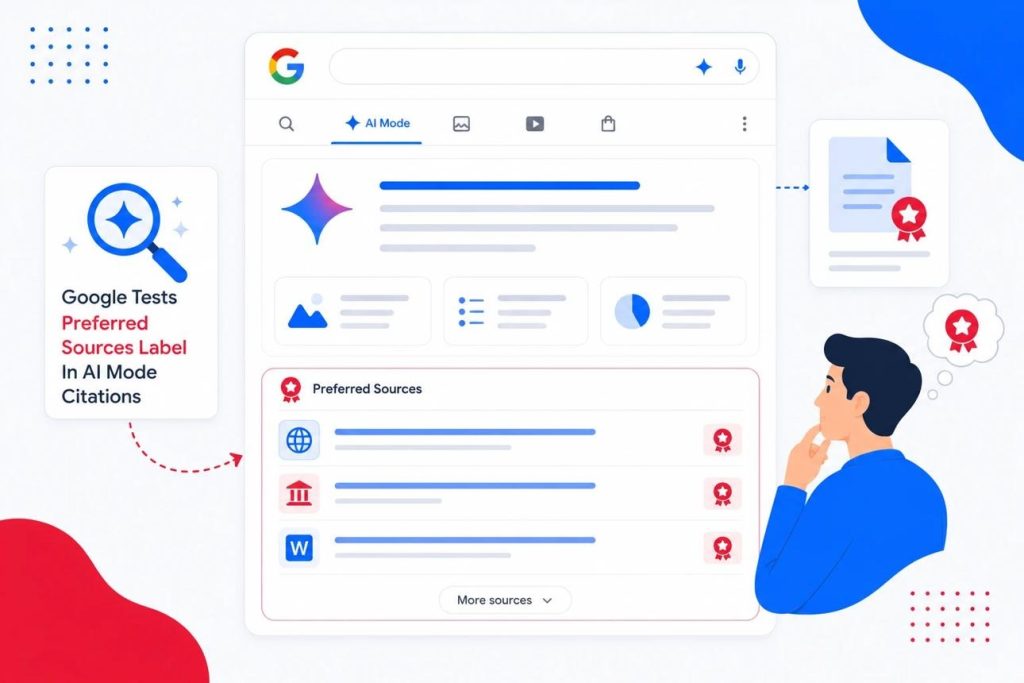
The shift has helped bring renewed attention to a familiar digital behavior: the zero-click search.
A zero-click search occurs when someone searches for information but does not click through to an external website. This can happen for many reasons, including weather cards, quick factual answers, maps, featured snippets, and AI-generated summaries.
AI search adds another layer to the trend by answering questions that previously might have required several visits.
Imagine a user searching for a viral celebrity moment. An AI summary could provide the basic timeline, identify the people involved, and explain why the story is trending. The user may feel informed enough to move on without reading a full report.
For that person, the experience works exactly as intended.
For the publisher, however, the result may be different. The article could supply information used in the summary while receiving no direct visit from the reader.
This creates a tension between convenience and the economics of content creation.
Reporting, fact-checking, interviews, photography, editing, and publishing all require time and resources. If fewer people visit the sites producing original work, publishers may find it harder to fund those activities through their established business models.
The issue is not that every search should generate a click. Users have always benefited from quick answers. The larger question is whether the internet can continue supporting original reporting when more discovery happens without a visit to the source.
Is AI Search Actually Helping People Discover New Websites?
The picture is more complicated than a simple story of AI replacing the web.
AI assistants can also introduce readers to sources they might not otherwise discover. When a response names a publication, links to an article, or recommends a specialized resource, it can create a new route to that website.
A study reported by Search Engine Land in August 2026, based on millions of searches, AI conversations, and publisher visits, found that the relationship between AI conversations and later news consumption was not straightforward. AI-referred visits represented a small share of the observed publisher traffic, but the analysis also found that readers sometimes visited publishers mentioned in AI responses afterward.
The study cautioned that the results did not prove AI caused those visits. They nevertheless suggest that AI can play a role in discovery even when it is not the final referral source.
That distinction matters.
A reader might ask an AI assistant about a developing entertainment story, see a publication mentioned, and later search for the outlet directly. Another might click a citation immediately. A third might accept the summary and never investigate further.
Each behavior creates a different outcome, and a simple referral report cannot capture every step in the process.
For publishers, the challenge is learning how to become a useful, recognizable source within this new discovery environment without assuming that being mentioned by an AI system automatically produces audience growth.
What Happens to Original Reporting?
One of the biggest concerns involves the relationship between information and the work required to create it.
An AI-generated summary may combine details from multiple sources. Yet the original reporting may have involved interviews, research, document reviews, firsthand observations, or editorial judgment that cannot be reduced to a few sentences without losing important context.
In Hollywood and viral culture, that context can be particularly important.
A trending celebrity rumor may spread rapidly, but the distinction between a confirmed announcement, an allegation, an anonymous-source report, and online speculation is essential. A responsible entertainment article explains what is known, what remains uncertain, and where the information originated.
A short summary can omit those distinctions if it is incomplete or poorly constructed.
The same issue applies to viral videos, influencer controversies, public statements, and breaking cultural news. The original article may contain corrections, updates, direct quotations, or reporting that changes how the story should be understood.
When readers encounter only a condensed answer, they may miss those details.
This is not an argument that AI summaries are inherently unreliable. Their usefulness depends on how they are generated, which sources they draw from, how accurately they represent those sources, and whether users can verify the information.
It is a reminder that a convenient answer is not always a substitute for the reporting behind it.
How Publishers Can Adapt
Publishers cannot control every change made by search platforms, but they can reconsider how they attract and retain audiences.
1. Build direct relationships with readers.
Email newsletters, subscriptions, community memberships, and social channels give publishers ways to reach audiences without relying entirely on search rankings. A reader who signs up for a newsletter can return regularly even when a search engine does not recommend a particular article.
2. Offer more than basic facts.
Simple questions are often easiest for AI systems to summarize. Original interviews, first-person reporting, distinctive analysis, expert commentary, carefully documented investigations, and useful editorial perspectives can give readers a reason to visit the source.
3. Strengthen brand recognition.
A recognizable publication gives readers something specific to seek out. Consistent editorial standards, a clear subject focus, and dependable reporting can help transform an occasional visitor into a returning audience member.
4. Make articles easy to understand and verify.
Clear headlines, descriptive subheadings, accessible writing, accurate publication dates, and transparent sourcing benefit human readers and help digital systems interpret content. Search optimization still matters, although it cannot guarantee that a page will receive traffic or be cited by an AI answer.
5. Measure more than search clicks.
Publishers should monitor returning visitors, newsletter signups, engagement, subscriptions, referral sources, and how often their brands appear in AI-generated responses where measurement tools are available. No single metric fully explains audience behavior.
6. Evaluate partnerships and licensing opportunities.
Publishers can assess whether agreements with AI companies, content licensing arrangements, or other distribution partnerships make sense for their businesses. The terms matter: visibility, attribution, compensation, usage rights, and editorial independence should all be considered rather than assuming every partnership is beneficial.
These strategies will not eliminate the uncertainty. They can, however, help publishers reduce dependence on a single distribution channel.
Will the Internet Become a Place Where People Read Less?
AI-powered search could make information easier to access while changing how people encounter the websites that publish it.
Some users may increasingly rely on short summaries for everyday questions. Others will still seek original articles when they want detailed reporting, strong opinions, entertainment coverage, product recommendations, or a deeper understanding of an issue.
The outcome may depend on the type of information being searched, the quality of the AI response, the user’s level of trust, and whether the original source offers something valuable beyond the summary.
There is also a broader question about choice. If users receive answers without visiting websites, they may spend less time navigating the open web. If AI systems consistently direct people to relevant, credible sources, they could help readers discover information more efficiently.
Both possibilities can exist at the same time.
The challenge is making sure that convenience does not weaken the ecosystem responsible for producing trustworthy information. A digital world filled with summaries still needs people and organizations to investigate events, verify claims, interview sources, and create original work.
The Next Chapter of Online Discovery
The October 26 conversation about AI-powered search reflects a larger transition in internet culture. Search is moving from a system that primarily directs people toward information to one that increasingly attempts to deliver the information itself.
For readers, that can mean faster answers and fewer steps. For publishers, it can mean new opportunities for visibility alongside a growing risk that their work will be consumed without a corresponding visit.
The long-term answer is not yet clear. Search platforms, AI developers, publishers, advertisers, and audiences are still negotiating what this new relationship should look like.
What is clear is that online discovery can no longer be measured only by traditional search rankings and clicks.
The future may reward publishers that build loyal communities, create distinctive reporting, and make their work worth seeking out directly. It may also require search platforms to consider how attribution, access, and compensation can support the sources on which their answers depend.
Because the internet is not simply a collection of answers. It is also a network of people, publications, and creative work that make those answers possible.
The question now is whether AI-powered search can make discovering information easier while ensuring that the original voices behind the stories remain visible.
References
- The Verge — Google’s AI Search Changes Upended Online Publishing
- Association of Online Publishers — Strategies for Publisher Survival as AI Syphons Search Engine Referrals
- Search Engine Journal — Google Search Decline Steepened to 40% Year Over Year for Publishers
- Search Engine Land — Only 1.1% of News Publisher Visits Come Directly From AI: Study
- Digital Content Next — The Evidence Is Clear: AI Search Is Costing Publishers